

It is hard to know what is the most alarming: the number of people who have been scammed; or the relentless variety of scams cropping up on every channel of our online lives, from text messages to phone calls to social media.
One thing is certain: for years, the authorities have been working hard to raise awareness about the lurking and growing dangers. The National Cybersecurity Coordination Centre under the umbrella of MITA, the Central Bank of Malta, the Malta Financial Services Authority, individual banks, the Malta Police: all of them warn us to stop and think, to assume that nothing is what it seems.
With the number of victims growing and attempts becoming more and more sophisticated, In Malta, this issue is one of a series being dealt with through campaigns organised by MITA-NCC. This campaign is being delivered in collaboration with the Malta Police Force.
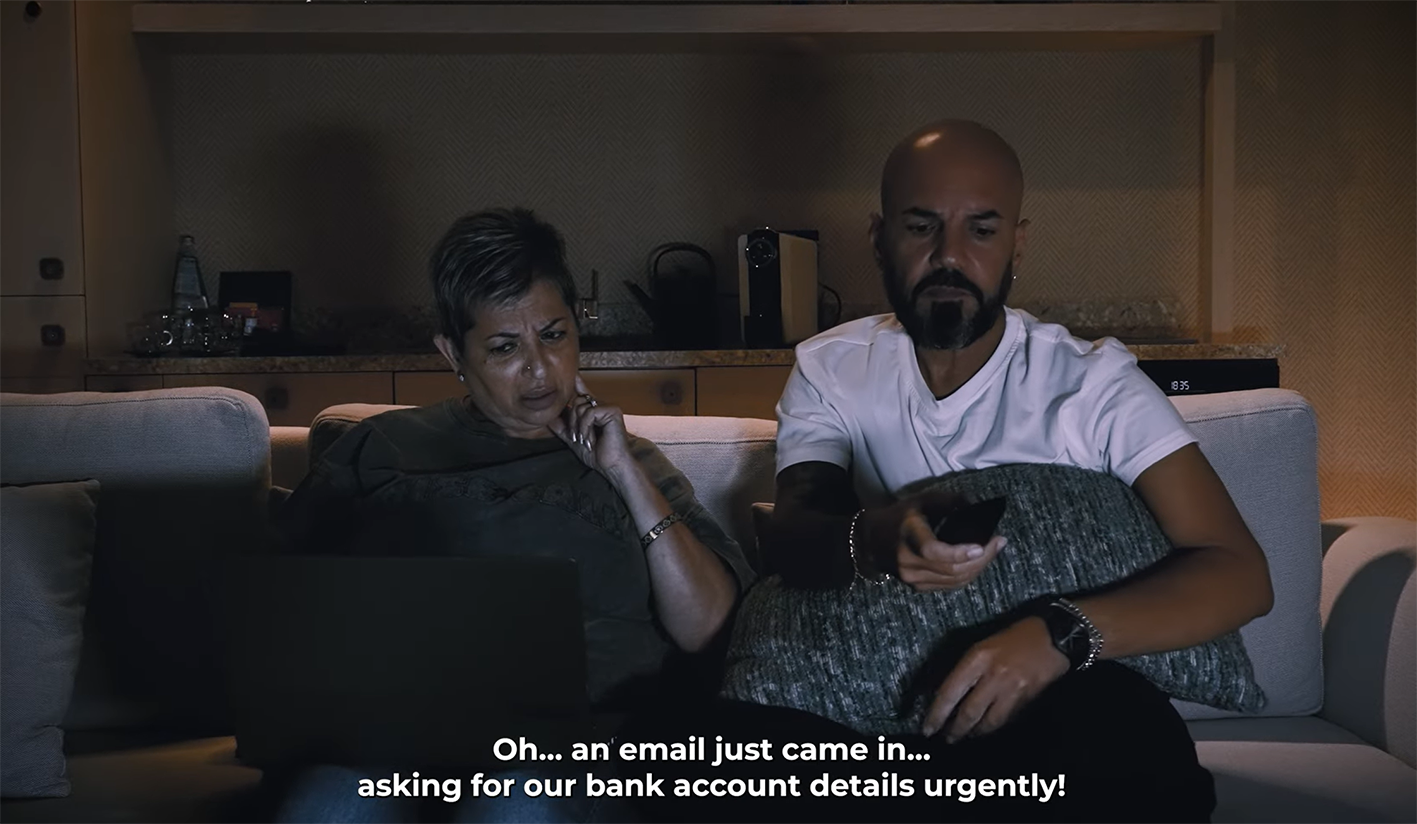
This series of episodes uses short videos to re-create realistic, everyday scenarios. The second episode takes place in the living room of a couple who receive an email impersonating a bank, which asks them to provide personal details.
What are the key messages? There are numerous red flags to look out for, the most important of which is a call for immediate action. But there are many common traits in scams that people should know about.
The most important thing to bear in mind is that reputable banks or financial institutions never request personal details via email or phone.
If you do receive any request or message purporting to be from your bank, you are encouraged to contact your bank directly, using official contact details to verify whether such a request is genuine. This is important as it enables banks to realise that its customers are being targeted, taking any action necessary internally, as well as prompting it to remind its customers about the possibility of scams and how to avoid them.
One thing to bear in mind is that scammers are often trying to steal your personal information as well information about your finances – which they can then use to mimic you, something which has become all too prevalent and convincing using artificial intelligence!
Bear in mind that links provide a ‘way in’ for scammers, and you should refrain from clicking on any as they may be an attempt to steal your information. As with every aspect of such scams, don’t take action but pause and think twice, be suspicious and assume that something might be a scam rather than a genuine attempt to make contact.
What if you are a scam victim? If you suspect that you have been targeted, you should report immediately to your bank, as well as to the Police via website pulizija.gov.mt or by calling tel. 21224001.
Over the coming months, look out for more campaigns linked under the slogan, “Int Importanti”. They all emphasise the importance of staying safe online and how we can look out for one another to help make the internet a safer place.