

AI chatbots are quickly becoming a common part of everyday life. Their popularity continues to grow thanks to their convenience and their ability to provide quick, human-like responses at the tap of a screen.
More people are turning to chatbots for assistance. Some rely on them to solve everyday problems, while others use them to discuss topics they may feel uncomfortable talking about with other people. Whether used for personal questions, professional support, or everyday advice, AI chatbots are available at any time and almost always produce a response.
However, as artificial intelligence continues to advance, over-reliance on these systems is becoming an increasing concern. The convenience of AI chatbots can also come with certain risks if they are not used responsibly.
Privacy is one of the most important considerations. Information shared with AI chatbot platforms may be stored by the service provider and, in some cases, used to improve the system or train future AI models. While this helps enhance the technology, it also raises questions about how personal data is collected, stored, and used.
There are also concerns about reliability. Like any digital system, AI chatbots can sometimes produce inaccurate, incomplete or misleading information. They may also be affected by technical limitations or influenced by malicious inputs designed to manipulate their responses.
AI systems rely heavily on the data used to train them. If that data contains inaccuracies or biases, these issues may also appear in the answers the system generates.
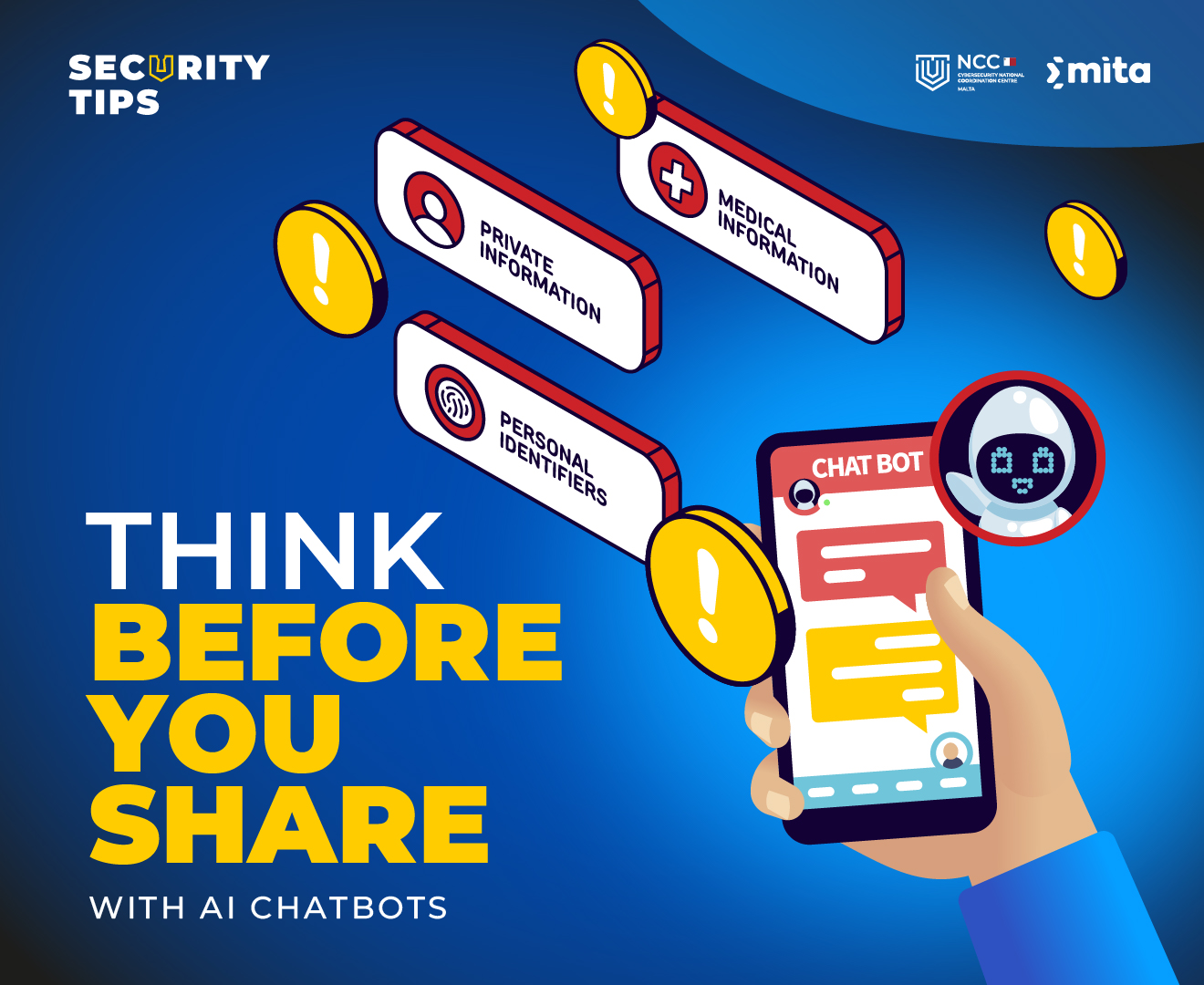
For these reasons, it is important to use AI chatbots carefully and avoid sharing sensitive information. Never share information that you would not want to become public, including:
- Personal data (home address, contact details, financial information)
- Health, legal, or mental health information
- Passwords, passkeys, or login credentials
- Private or confidential documents
If you are using AI chatbots on a mobile device or through a web browser, review the platform’s privacy settings. Where possible, disable unnecessary data access such as location services, gallery access, microphone access, or contacts.
You may also consider using these platforms without creating an account, where this option is available. While this may sometimes result in fewer features or less personalised responses, it can help reduce the amount of personal data linked to your activity.
AI chatbots can be useful tools that offer many benefits. The key is to use them wisely. Enjoy the convenience they provide but always remain mindful of the information you share.
Always remember – If you wouldn’t share something publicly, don’t share it with an AI chatbot.