

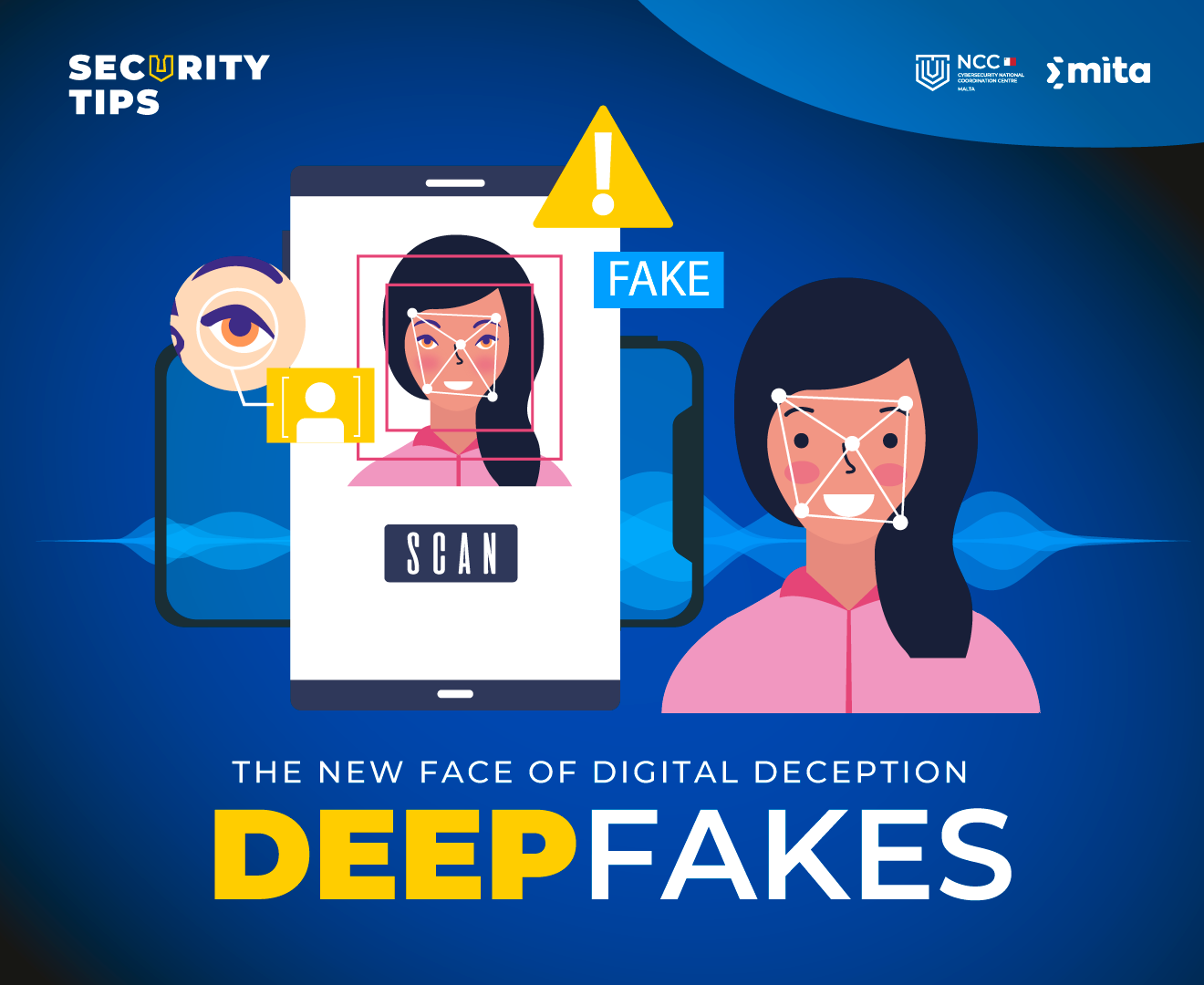
Have you ever watched a video of someone you know and found yourself questioning whether what you’re seeing is genuine? At first, everything appears perfectly normal, but then the person in the video starts saying things that are completely out of character for them.
Or perhaps you’ve come across a photograph showing someone behaving in a way that simply doesn’t fit with their usual behaviour. The image looks so authentic that it’s easy to accept it as real.
It’s only later you discover that what you saw was not genuine at all, but rather the result of deepfake technology. This technology makes it increasingly difficult to distinguish between what is real and what is fabricated. As deepfakes become more widespread, their unsettling effects on how we perceive truth and reality also grow.
How it works – the technology behind it
Deepfakes are created using artificial intelligence tools that are trained on large datasets of existing images, video or audio. By using different techniques, the manipulation of existing media into fake media becomes possible.
With the advancements in technology and available software, creating deepfake content does not necessarily require any special skills. With the use of easily accessible and user-friendly software and tools, the creation of deepfake content is simply a few clicks away.
What is it used for?
In various industries the creation and use of false content is carried out for valid reasons. For example, in the movie domain, it allows film producers to age an actor. It enables them to ‘use’ dead actors for future movie parts. In the historical or cultural domains, historical figures can be animated and hence deliver even more immersive exhibits.
However, as described above, such technology may be used for malicious intent. It may be used to:
- Spread misinformation through believable hoaxes or false news reports.
- Carry out blackmail attempts as malicious actors create false content on a person and threaten to spread it if a ransom is not paid.
- Carry out scams and identity theft by using content that imitates someone’s identity for example through:
- Face swaps. In this method, the face of one person is replaced by another in a video.
- Lip-sync. In this method, the content uses the actual real face, but the speech is replaced with fake speech.
- Voice cloning. In this method, manipulation of the persons voice occurs. The tone, cadence and speech patterns are replicated and used in voice content.
- To carry out and distribute adult content. This raises great concern on privacy violations as these creations are made using nonconsensual ai-generated content.
- Attackers can use deepfakes to bypass face or voice recognition authentication, using fake content to unlock and access systems.
- Deepfake calls or videos can advance social engineering attacks by allowing criminals to impersonate superiors, convincing employees to authorize actions like fund transfers.
How to detect
The biggest issue with deepfakes is that the generated fake images, videos and audio are so realistic that it is very hard to tell reality and false apart. Although detection is becoming more difficult there are a few indicators that remain useful in distinguishing fake from real:
Manual Observation
Look for visual cues such as:
- Irregular blinking patterns
- Mismatched lip movements or corners
- Awkward facial transitions
- Inconsistent lighting or shadows
- Strange skin textures or reflections
- Unnatural audio pacing or intonation
Verification Practices
Verify the authenticity of the content by:
- Cross-checking the original source of the media
- Validating whether depicted events, dates or locations are real
- Examine the metadata of the video or audio file. Metadata contains important information about the content, such as when it was originally created, the author or original source and size.
Technical Tools
In addition to manual verification, one can also make use of technical tools designed to analyse digital content for signs of manipulation, such as deepfakes. These tools can scan images, videos, or audio to determine if they have already appeared elsewhere on the internet. Furthermore, advanced software can detect digital artefacts, such as hard to spot inconsistencies or traces left by editing.
How can you help prevent deepfakes
Always share content responsibly. Before you do so take a moment to check whether the content is true. If anything feels ‘off’ it is best not to share it with others.
Limit what you share publicly. Remember that what you share about yourself online (such as photos, videos, or personal details) could potentially be misused. Once you post personal information online, you lose control over how this information is used. There’s a risk that it could end up being used to create deepfake content.