

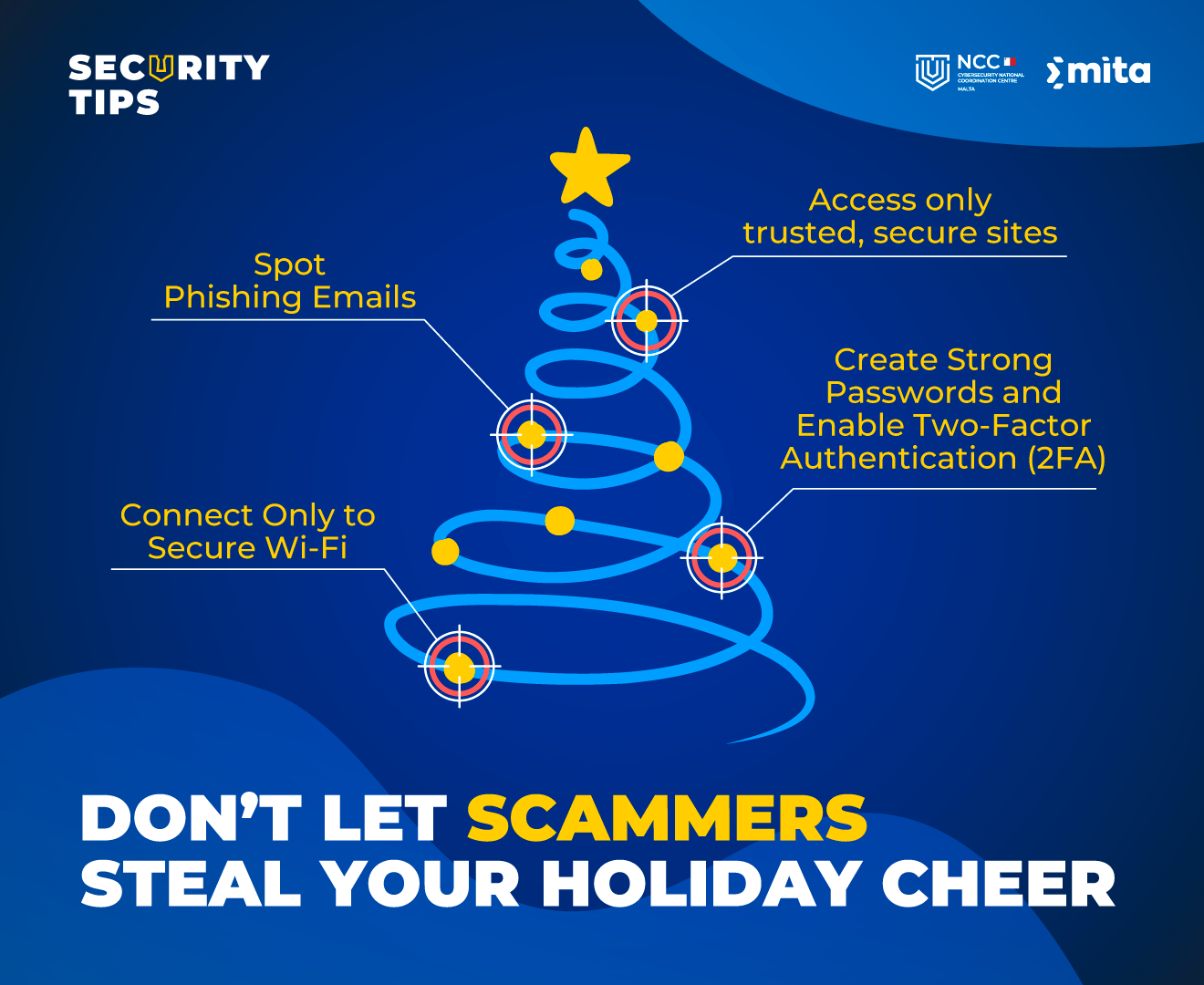
Christmas is a season of joy – a time when families gather, exchange gifts, and enjoy each other’s company. Stores are filled with holiday sales, crowds of shoppers, and people searching for the perfect present. Unfortunately, this festive atmosphere also attracts scammers who take advantage of distracted and generous shoppers. To keep your Christmas joyful and safe, here are some key tips to avoid common holiday scams.
1. Spot Phishing Emails
Phishing scams are especially common during the Christmas season. Scammers often send emails that appear to be from legitimate companies, tricking you into clicking malicious links that lead to fake websites. Common examples include fake delivery notifications or messages claiming you’ve won a prize. Never click suspicious links and always verify the sender’s email address before trusting a message.
2. Access only trust, secure sites
When shopping online, always make sure the website is secure. Look for URLs that begin with “https://” and check for the small lock icon in the address bar—this indicates that your connection is encrypted. Keeping your browser updated is equally important, as outdated versions may fail to detect or block unsafe sites.
3. Create Strong Passwords and Enable Two-Factor Authentication (2FA)
Use strong, unique passwords for every account, especially on shopping platforms. Avoid reusing passwords across websites. Storing your passwords in a secure password manager can help you stay organized.
Enable two-factor authentication whenever possible. 2FA provides an extra layer of security by requiring a temporary code – one that changes every 30-60 seconds – before you can log in.
4. Connect Only to Secure Wi-Fi
Before making any online purchase, ensure you are connected to a secure, private Wi-Fi network. Avoid entering sensitive information while using public Wi-Fi, as your data can be easily intercepted. If you need to shop while away from home, using a VPN adds protection by encrypting your internet connection.
5. Don’t Fall for Seasonal Scams
Scams increase dramatically during the holiday season. Some common ones include puppy scams, fake giveaways, fraudulent charities, and fake shipping notifications. These can often be avoided by ignoring pop-up ads, refusing to click suspicious links, and verifying the legitimacy of any offer before engaging with it.
Final Thoughts
Always think before you act. Take a moment to ask yourself whether the website, deal, or message seems trustworthy. Being cautious helps protect your personal information and ensures your holiday season remains joyful rather than stressful. By staying alert and shopping safely, you can keep scammers from stealing your Christmas cheer.