

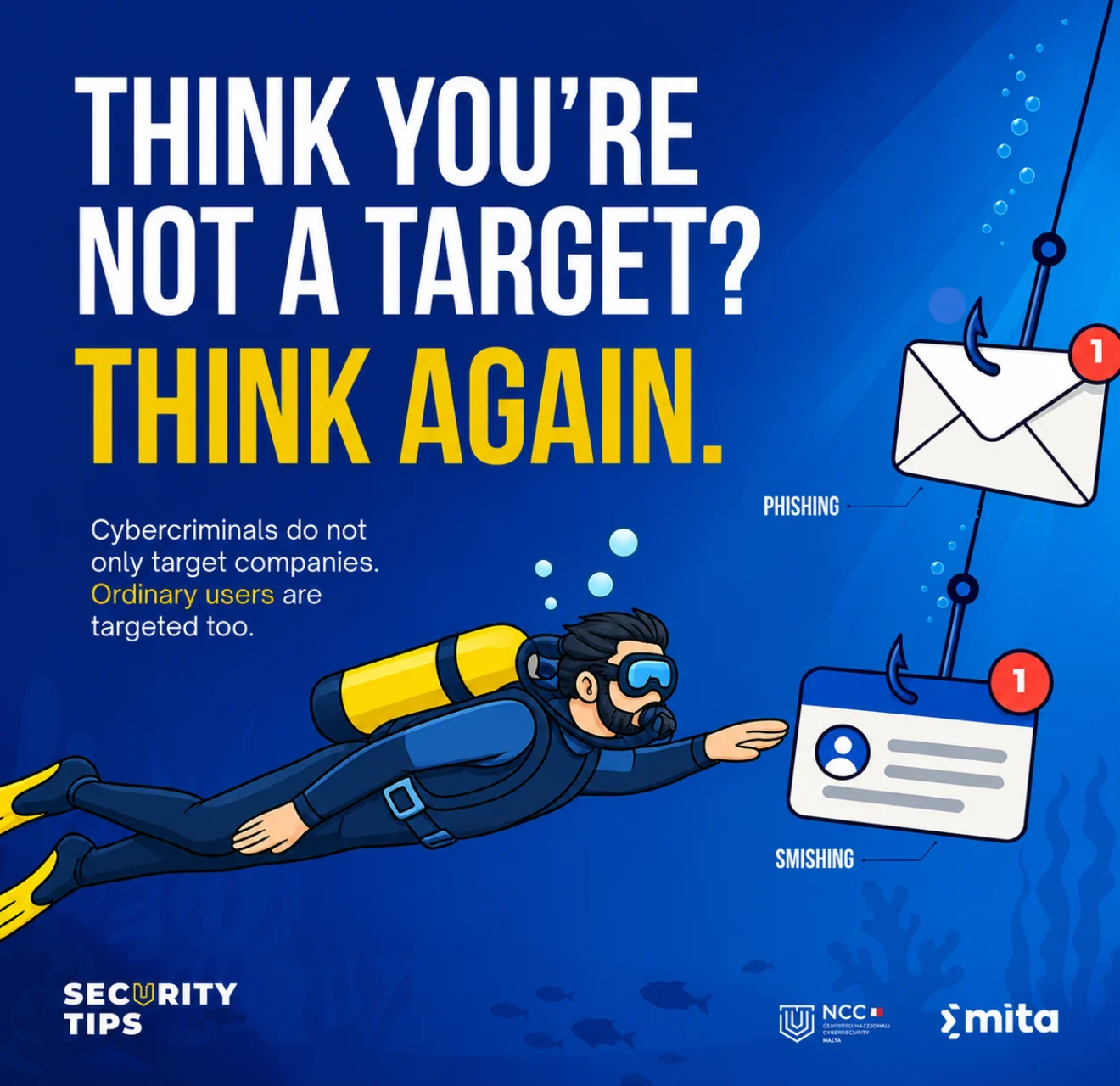
Have you ever heard about a cyberattack and thought, “I am not a target! I have nothing they want”?
If so, think again.
Cybercrime has become a highly profitable global industry, and in today’s connected world, everyone is a potential target. Cybercriminals do not only target companies or high-profile individuals. Ordinary users are just as likely to be targeted as larger organisations. Cyberattacks against individuals are a real threat, with the aim of stealing data, causing harm, or gaining unauthorised access to personal accounts and devices. For example, by taking over a real user’s account, attackers can approach that person’s friends, colleagues, or contacts with requests for money or sensitive information. The message will appear to come from a genuine and familiar account, therefore it is far more credible and the victim is more likely to respond.
Some of the most common cyber threats affecting individuals include:
- Social engineering attacks– Still one of the most common ways attackers gain access to sensitive information. Examples include:
- Phishing (through fraudulent email),
- Smishing (through fraudulent mobile text messages)
- Quishing (through fraudulent QR codes)
- Vishing (voice calls impersonating a trusted entity or individual)
- Malware and spyware – designed to infiltrate or damage a device, steal information, or monitor user activity without consent.
- Ransomware attacks – can lock or encrypt a user’s files and systems, making data inaccessible. Attackers then demand payment in exchange for restoring access.
The consequences of these attacks should not be taken lightly. In Malta, €13M scams investigated by Malta’s Financial Crime Investigation Department in the first 6 months of 2025, while a reported €3.1 million in fraud losses were reported by a local leading financial services institutions’ client. These figures show that online scams are a real local threat, not a distant problem. AI is also making scams more convincing, with local reports warning that fraudsters are already using AI-generated Maltese voice calls to deceive victims.
These incidents can result in financial loss, invasion of privacy, reputational damage, and emotional or psychological stress.
Reduce your risk – protect yourself:
- Keep your software and operating system up to date.
- Use antivirus software and keep it updated.
- Use strong, unique passwords, or a reputable password manager to generate and store them securely.
- Never open suspicious emails or attachments.