

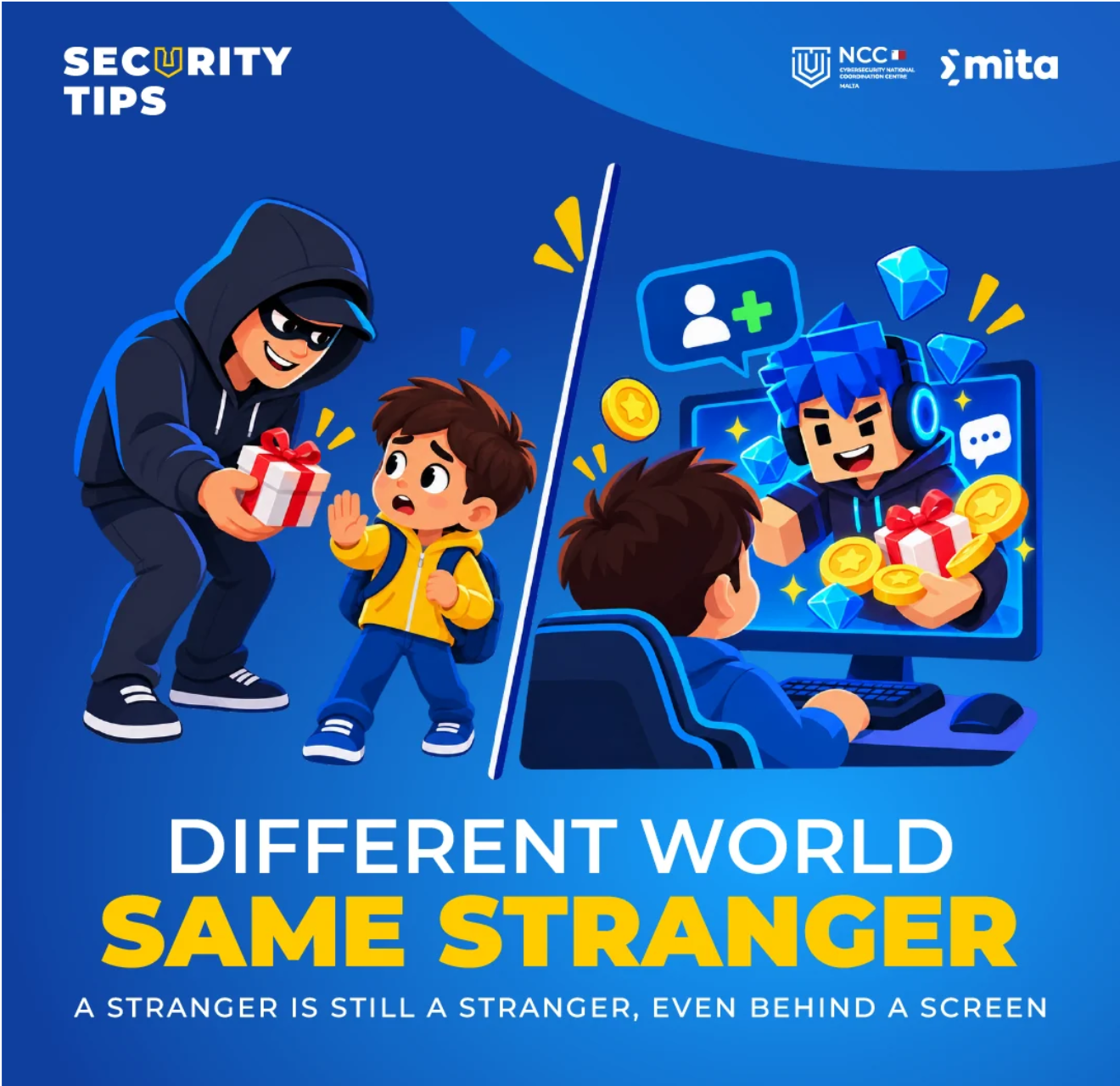
From a very young age, we are taught to be careful around people we do not know.
Someone might seem friendly and they might offer you something you really want or tell you they know someone you trust. But before you believe them, you stop and think.
The Online world should be no different.
The person messaging you while you are gaming, chatting or scrolling may sound friendly. They may use information you have already shared online to make themselves appear more familiar or trustworthy. They might offer you free coins, a prize or something that sounds too good to miss. But remember, you do not always know who is really behind the screen.
Knowing someone’s username, gaming with them or chatting with them for a long time does not mean you know who they are. So use the same rule online that you use in the real world:
Stop. Think. Check.
- Do not share personal information with someone you do not know.
- Do not click suspicious links or accept unexpected offers.
- And if something does not feel right, stop the conversation and tell someone you trust.
For parents and guardians:
- Teach your child to advocate caution online just as they would in the real world.
- Take an interest in their online world. Know which games, applications and social media platforms they use.
- Make them feel open to talk to you no matter what happens.
- Help them recognize when to stop and when to ask for help.
It may be a different world, but a stranger online is still a stranger.
Stay curious. Stay cautious. Stay safe.